Kitchen Remodeling Moves Outdoors: Gas, Water, Drain and Shade on a Desert Patio
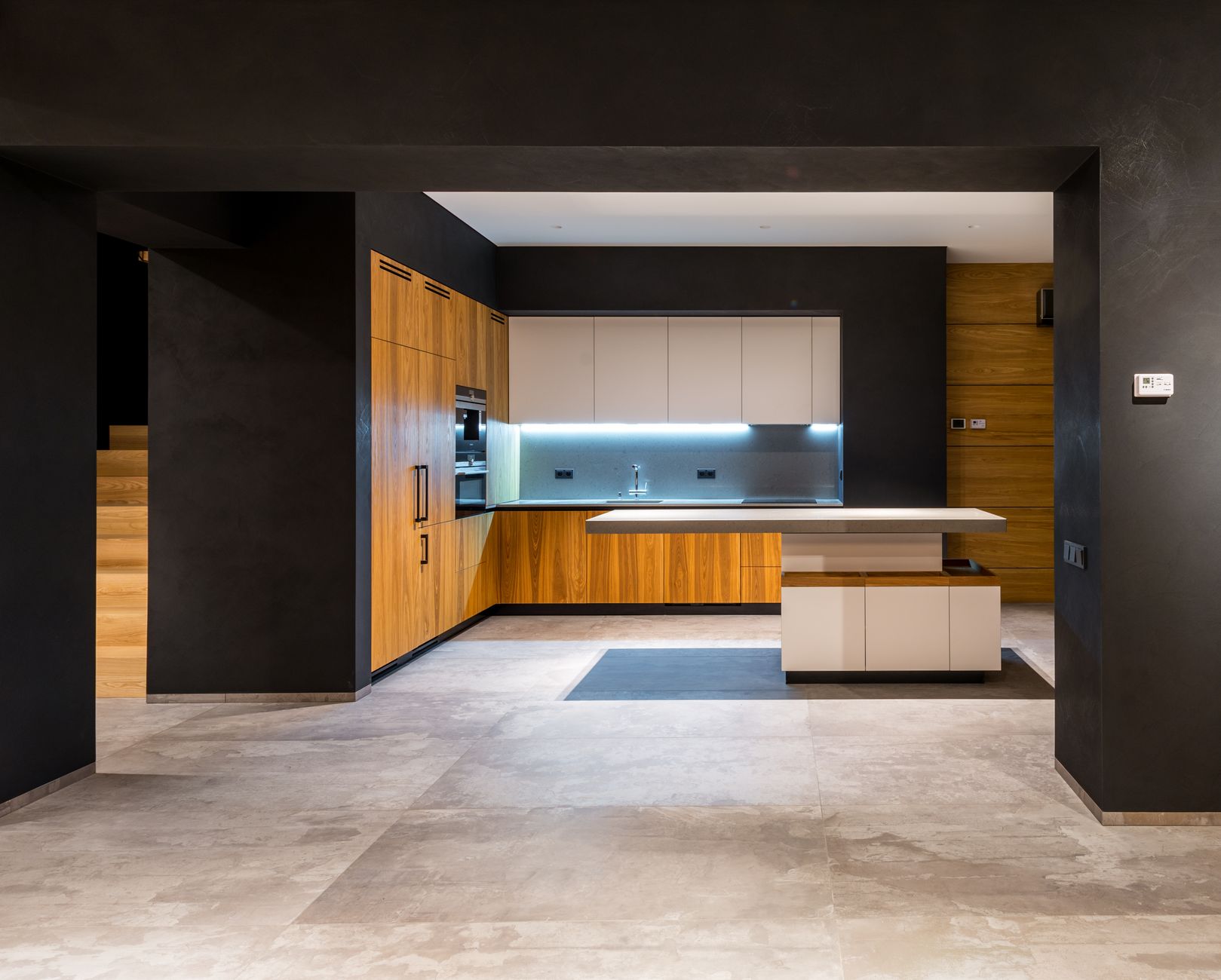
A patio kitchen is drawn as furniture and built as four trenches. The renderings show an island, a grill, a long counter and a couple of stools under something that casts shade. What actually decides whether the thing is still pleasant to cook on in year five is gas, water, waste and a dedicated circuit, every one of which has to leave the house, cross whatever lies between the house and the patio, and surface at an exact point that will shortly have concrete and masonry sitting on top of it.
That reverses the usual order of a kitchen project. Indoors, the services are already at the destination and the argument is about whether to move them. Outdoors there is nothing at the destination at all, so the layout is not a drawing exercise that the trades then follow. It is the other way around: the route the gas line can take, the fall the drain needs and the place a sub panel can reach are what fix the island where it ends up.
The crews who handle kitchen remodeling in scottsdale generally do this work too, and that makes sense, because the trades are identical. The conditions are not. A grill island on a desert patio lives through a hundred and fifteen degree afternoon, an August dust storm, a monsoon downpour that arrives in fifteen minutes, and tap water hard enough to close up a faucet aerator in a season. None of that shows on a plan view.
The four services, and which one sets the position
Gas is the one that needs sizing, not just running
A grill, a side burner, a power burner and a fire feature together can draw more than a furnace does. The question is never whether gas can reach the patio, it is whether the existing meter and the existing pipe have the capacity left to feed that load at the far end of a long run without the pressure sagging when two things fire at once.
That calculation comes before the island is located, because the honest answer sometimes is a larger pipe back to the meter, or a meter upgrade, or a separate run rather than a tee off a line already feeding a water heater and a cooktop. Flexible appliance connectors belong at the appliance only. The buried portion is rigid pipe, sleeved, wrapped where that is required, and pressure tested before anything covers it.
A design decision worth making early: a quick disconnect at the grill rather than a hard connection. It costs very little while the pipe is open and it is what lets a grill be pulled out and replaced in ten years without a plumber.
Water, and the length of the dead leg
Supply is the easy service, with one wrinkle nobody mentions. A line running out to a patio sink sits in hot ground, full of still water, all afternoon. The first thing out of that tap in July is genuinely hot, and it stays hot for as long as it takes to flush the run. Shortening the route, burying it deeper than the minimum and insulating the sleeve all help. Nothing eliminates it.
If there is an ice maker or a beverage cooler in the plan, it taps the same line and wants its own accessible shutoff and its own filter. More on that below, because water chemistry out here kills outdoor appliances well before heat does.
Drain is the service that moves the island
Waste water falls. That single fact outranks every aesthetic preference in the design. An outdoor sink needs a trap, a vent and continuous slope back to a point where it can tie into the house drain at the right height, and the available tie-in point is usually under the slab or on the far side of the house from where the island looked best.
Two shortcuts get offered and both deserve scrutiny. Draining an outdoor sink to a dry well or a landscape bed may be allowed where only clear water is involved and is not a general licence for a sink people will wash plates in. An air admittance valve instead of a run of vent pipe is accepted by some jurisdictions and refused by others. Both are questions for the plumber and the local building department rather than assumptions, and the answer changes the island position, so it gets settled on paper.
Power, and why one circuit is never enough
Count the loads honestly. A refrigerator or beverage cooler, an ice maker, task lighting, ceiling fans, a receptacle run along the island, possibly a mister pump or a vent hood over a built-in grill. These are all small individually and they are all running at the same time on the hottest evening of the year, which is exactly when a compressor is working hardest.
The usual answer is a small sub panel in a weatherproof enclosure near the patio rather than several long home runs back to the main panel. Receptacles outdoors are weather resistant, in-use covers, protected to current code. The refrigeration gets its own circuit, because sharing one with lighting means a nuisance trip empties a cooler nobody checks for two days.
Digging here is a two layer problem
The top of a typical lot is decomposed granite and sandy soil, which trenches easily and gives a false impression of how the day will go. Underneath it, often at a foot or two, sits caliche: a cemented hardpan that behaves much more like weak concrete than like soil. A trencher that was moving comfortably stops dead on it, and the tools change to a jackhammer, a rock saw or an excavator with a breaker.
Three consequences are worth knowing before a price is agreed.
The trenching line item is the one most likely to move, so ask whether it was bid assuming soil or assuming hardpan, and what happens if the hardpan is shallower than expected.
Spoil does not go back the way it came out. Broken caliche does not compact like the material around it, and a trench backfilled carelessly under a new slab or paver field is a settlement crack waiting for the second monsoon season.
All four services cross the same ground, and the smart move is one open trench with proper separation rather than four visits. Gas, water and waste follow their own required depths and clearances, electrical goes in conduit, and low voltage for lighting or audio gets its own sleeve rather than sharing a pipe with line voltage. Sleeve one spare conduit while the trench is open. It is the cheapest thing in the entire project and the only way a future mister line, speaker run or second circuit gets in without cutting concrete.
Where the shutoffs go
Every service wants a shutoff that is outside the island, labelled, and reachable without lying on the ground with a flashlight. Gas gets an accessible valve ahead of the quick disconnect. Water gets a stop and, in a design with an ice maker, a second one for that branch. Power gets a local disconnect at the sub panel.
Masons will happily close up an island with the valves buried inside it, because the island looks better that way and nobody asks. Then a seasonal shutdown, a weeping supply line or an appliance swap becomes demolition. Access panels on the back or the end of the island, sized for a hand and a wrench, are specified at framing or they do not happen.
Orient the cook zone against the west sun first
A patio kitchen gets used in the evening, which puts the sun low and directly in the cook's face on a west facing yard. Standing at a grill looking into that is unpleasant in April and not viable in July, when the radiant heat off a block wall is still arriving well after sunset.
North facing counters, with the cook's back to the low sun, work better than any amount of shade added afterwards. Where the patio orientation cannot change, the shade structure has to extend lower on the west side than a pergola normally does, which means a louvre system that closes, a drop screen, or a solid roof with a deeper overhang on that face. Open lattice is a summer ornament in Scottsdale. It filters midday sun and does almost nothing at five in the afternoon.
Shade over the cook zone also has to respect clearances above a grill, which rules out fabric directly over the hood line and makes a combustible pergola rafter a real question rather than a detail. Settle the structure type and the grill position together, not in sequence.
Dust, monsoon water and the drainage nobody drew
A haboob puts a fine grit film over every horizontal surface and into every appliance vent in one evening. The practical defences are closed storage rather than open shelving, stainless doors with gaskets rather than decorative open bays, and fitted covers for the grill and the side burner kept somewhere within arm's reach so they actually get used.
Then the rain arrives all at once. Three drainage points matter. The slab under and around the island needs positive fall away from the house. The island itself needs its interior to drain and dry rather than hold water around a gas valve and an electrical box. And the shade structure concentrates runoff, so wherever its low edge sits, that is now a small roof dumping on a specific square foot of patio, which is worth directing with a gutter rather than discovering during a storm.
Hard water is what actually destroys outdoor appliances here
Valley water is very hard, and outdoors the evaporation rate does the rest. Scale forms on a faucet and a sink in months, and inside an ice maker it is a slower and more expensive failure, because the fill valve and the evaporator plate both foul.
An inline filter on the branch feeding ice and beverage equipment is ordinary practice and gets changed on a schedule somebody has to own. Choose a faucet with a removable aerator and a cartridge still in production rather than a sealed decorative one. Expect to descale, and build the access that lets it be done.
What survives a hundred and ten degree ambient
Outdoor rated is not a marketing word on refrigeration. An indoor undercounter refrigerator placed outside is being asked to reject heat into air hotter than its design assumption, and it responds by running continuously, shortening its life, and never reaching temperature on the days it matters most. Outdoor rated units carry larger condensers, different compressors and sealed controls, and they still want shade and clear ventilation behind them rather than a tight masonry pocket.
The same logic runs through the rest of the build. Stainless hardware over plated, since plating gives up in this sun. Powder coated or marine grade fasteners in anything structural. Gaskets and knobs on a grill are the first parts to perish, so a brand with parts availability is a better purchase than a heavier shell with none. Any electronics, a television or a controller included, needs shade and a vented enclosure or it fails in its second summer.
Put the four services, the dig, the shade geometry and the appliance list in front of each other at the same time, before any concrete is ordered. In a Scottsdale yard that single conversation is most of the difference between a patio kitchen somebody cooks on three nights a week and an expensive stone sculpture holding a grill nobody lights after May.